
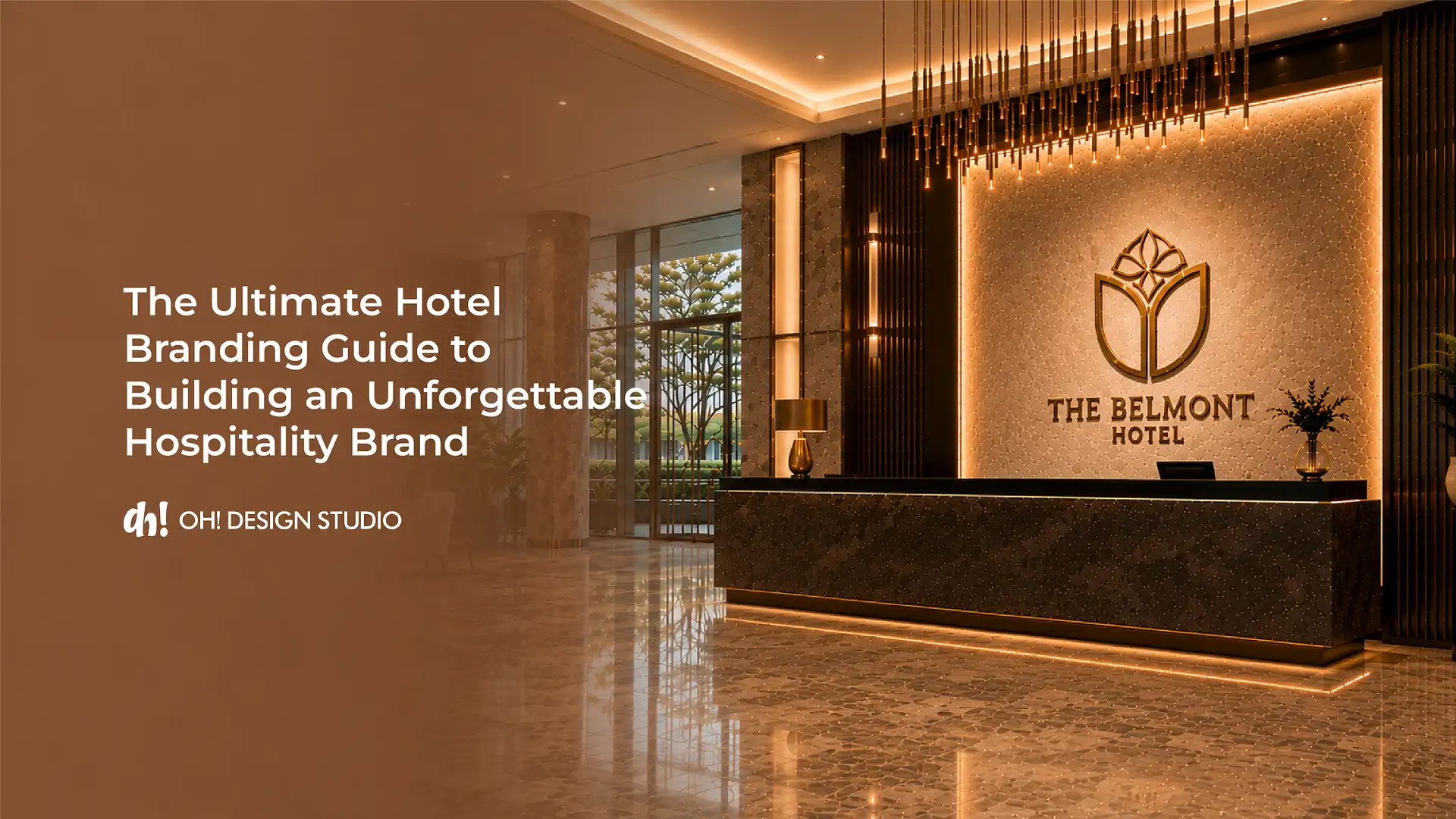
In today’s hospitality industry, guests are no longer choosing hotels solely based on location, amenities, or pricing. They are choosing experiences that shape how they remember and value a stay. From the moment a potential guest discovers a hotel online to the memories they take home after checkout, every interaction influences how the brand is perceived. This is why hotel branding is one of the most valuable investments for hospitality businesses.
A strong brand transforms a hotel from simply being a place to stay into a destination people remember, recommend, and return to. Whether it’s a luxury resort, a boutique property, a business hotel, or a heritage retreat, branding shapes expectations and strengthens the value of the guest experience long before arrival.
This comprehensive hotel branding guide explores how hotels can build a distinctive identity, create meaningful guest experiences, and establish long-term brand loyalty to strengthen their positioning in an increasingly competitive market.
Why Hotel Branding Matters More Than Ever

The hospitality sector has evolved dramatically over the past decade. Online travel platforms, guest reviews, social media, and digital booking experiences have intensified competition. Guests can compare hundreds of hotels within minutes, making first impressions incredibly important.
Effective hotel branding creates emotional connections that go beyond room rates and facilities. It communicates what the hotel stands for, who it serves, and why guests should choose it for a stay that feels more valuable and memorable.
Successful branding builds trust, improves recognition, increases direct bookings, and encourages repeat visits. More importantly, it creates consistency across every guest interaction, helping the hotel deliver the experience it promises.
Building a Strong Hotel Brand Identity
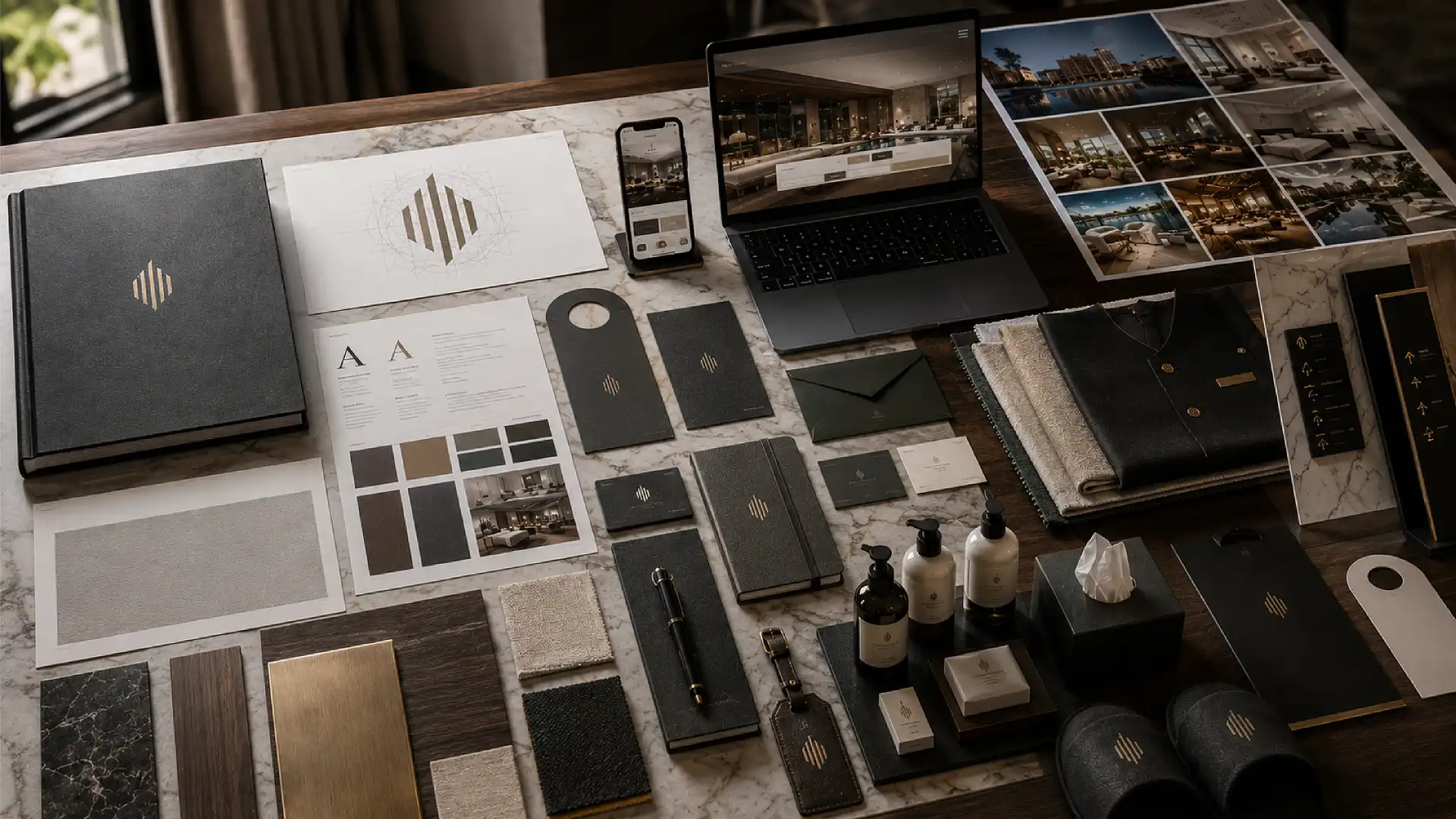
Every successful hospitality business begins with a clearly defined hotel brand identity. This identity extends far beyond a logo or colour palette. It expresses the hotel’s personality, values, service philosophy, and the experience guests can expect.
A luxury resort may position itself around exclusivity and personalised service, while a lifestyle hotel might focus on creativity, community, and local experiences. Boutique properties often celebrate culture, architecture, or heritage to create memorable stays that larger chains cannot easily replicate.
Interior design, uniforms, photography, tone of voice, website design, and guest communication should all consistently reflect the hotel’s identity.
Without a clear hotel brand identity, even exceptional properties struggle to differentiate themselves in a crowded marketplace, making it harder for guests to choose them.
The Role of Hotel Branding Design
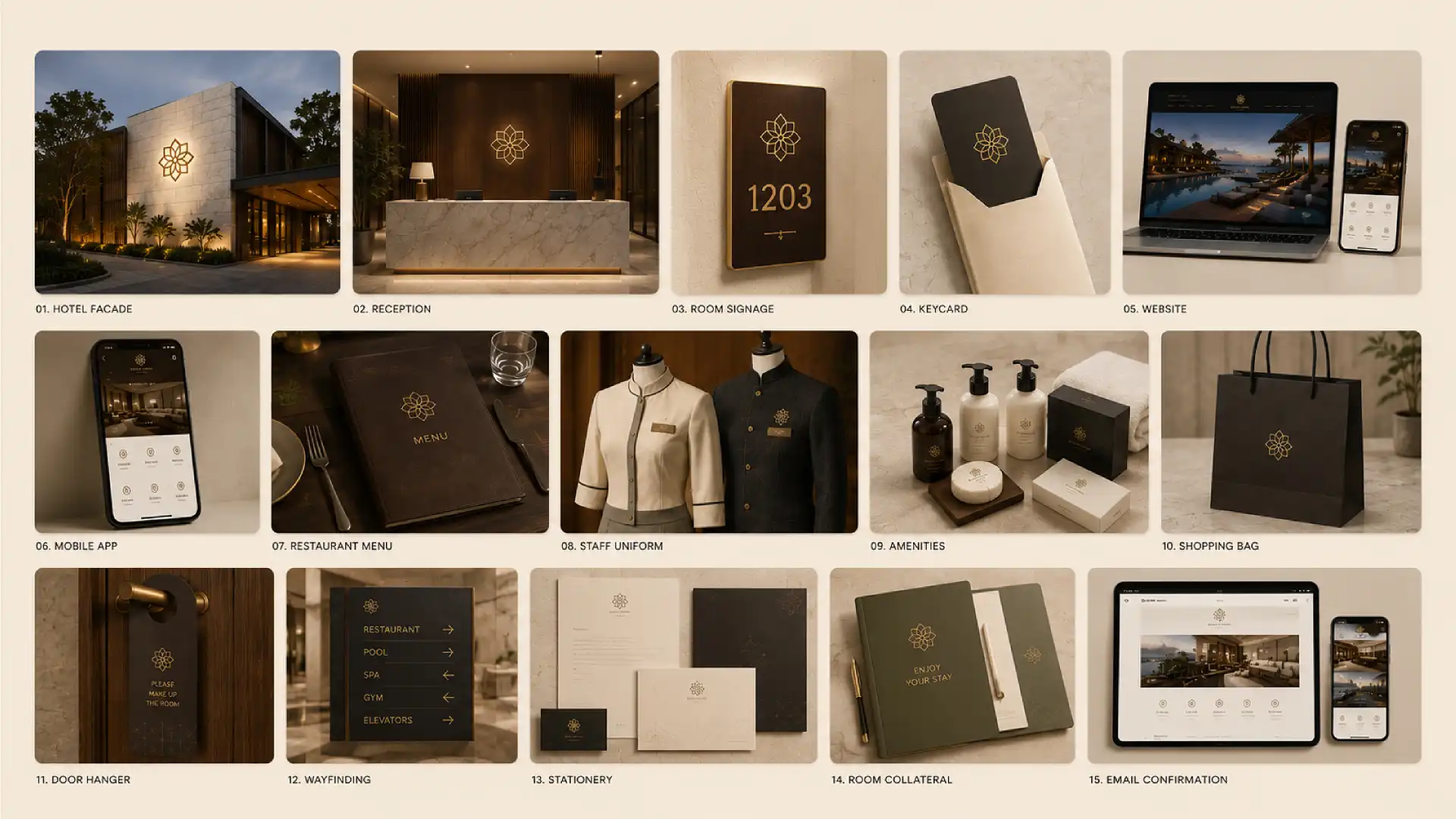
Visual communication plays a significant role in shaping guest perceptions. Professional hotel branding design ensures that every visual element supports the hotel’s positioning and makes its value proposition easier to recognise.
This includes the hotel’s logo, typography, colour palette, signage, menus, stationery, room collateral, digital interfaces, uniforms, key cards, packaging, and environmental graphics.
Consistent design creates familiarity and strengthens brand recognition across every guest touchpoint. Whether someone visits the website, receives an email confirmation, or checks into the property, the visual experience should feel seamless and connected.
Thoughtful hotel brand design helps create a sense of quality, professionalism, and trust that directly influences booking decisions and guest confidence.
Creating an Effective Hotel Branding Strategy

Great branding doesn’t happen by accident. Every successful hotel develops a clear hotel branding strategy that aligns business objectives with the value it promises guests.
A strong branding strategy begins with understanding the target audience and what different guests want from their stay. Business travellers, families, luxury tourists, wellness seekers, and destination wedding guests all value different experiences.
The strategy should define the hotel’s unique positioning, core messaging, service philosophy, visual language, and customer experience standards so guests receive a consistent experience. It should also establish how the brand communicates across digital platforms, advertising, social media, and on-property experiences.
When branding is guided by a clear strategy, every department—from marketing to housekeeping—contributes to a consistent guest experience.
Luxury Hotel Branding vs Boutique Hotel Branding
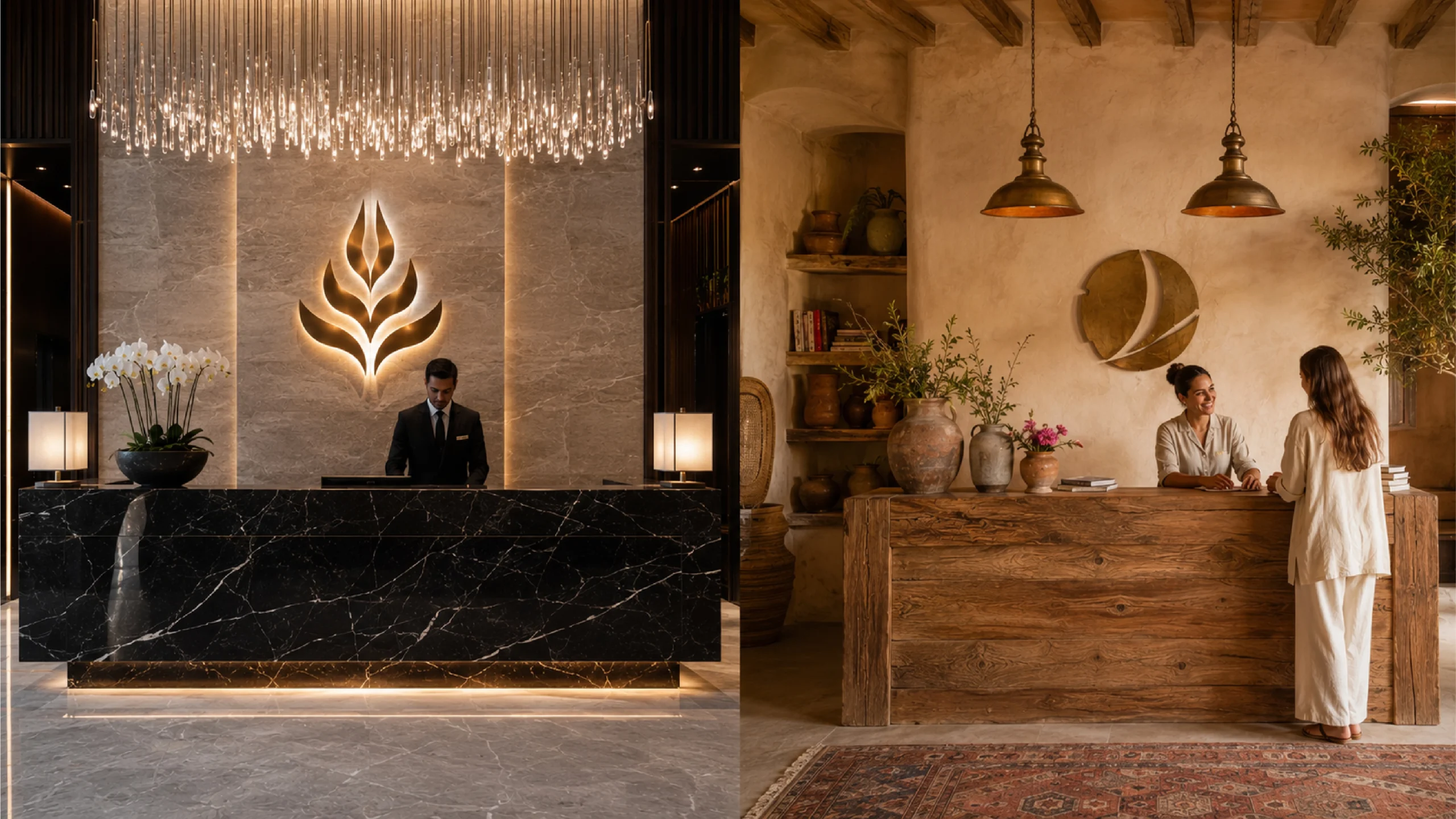
Different hospitality segments require different branding approaches.
Luxury hotel branding focuses on exclusivity, elegance, exceptional service, and attention to detail. Every touchpoint is designed to create a premium experience that clearly signals its value from the first impression.
On the other hand, boutique hotel branding often celebrates individuality and storytelling. Boutique properties thrive by offering authentic experiences, local culture, distinctive architecture, and highly personalised service that feels unique to each guest.
Boutique hotels build emotional connections through character, originality, and memorable experiences rather than competing with large hotel chains.
Understanding these distinctions allows hospitality businesses to develop branding that genuinely resonates with their ideal guests.
Hotel Logo Design: The Face of the Brand

One of the most recognisable elements of any hospitality business is its logo. Professional hotel logo design serves as the brand’s visual signature and supports how guests recognise its value.
An effective logo should be timeless, versatile, memorable, and aligned with the hotel’s positioning. Whether displayed on signage, in-room amenities, websites, uniforms, or digital platforms, it becomes an instantly recognisable symbol of the guest experience.
However, it’s important to remember that a logo alone does not create a brand. It works most effectively when supported by a comprehensive visual identity system and a consistent guest experience.
Hotel Marketing and Branding Go Hand in Hand

Branding and marketing are closely connected but serve different purposes. Branding defines who the hotel is, while hotel marketing and branding work together to communicate that identity and value to potential guests.
Marketing campaigns become significantly more effective when supported by strong branding because every advertisement, website, social media post, brochure, or email reinforces a consistent message for guests.
Hotels with clear brand positioning often enjoy stronger customer loyalty, improved online reputation, better guest recall, and higher direct booking rates.
As digital competition intensifies, integrated branding and marketing have become essential for long-term success and a stronger guest connection.
When Is Hotel Rebranding Necessary?
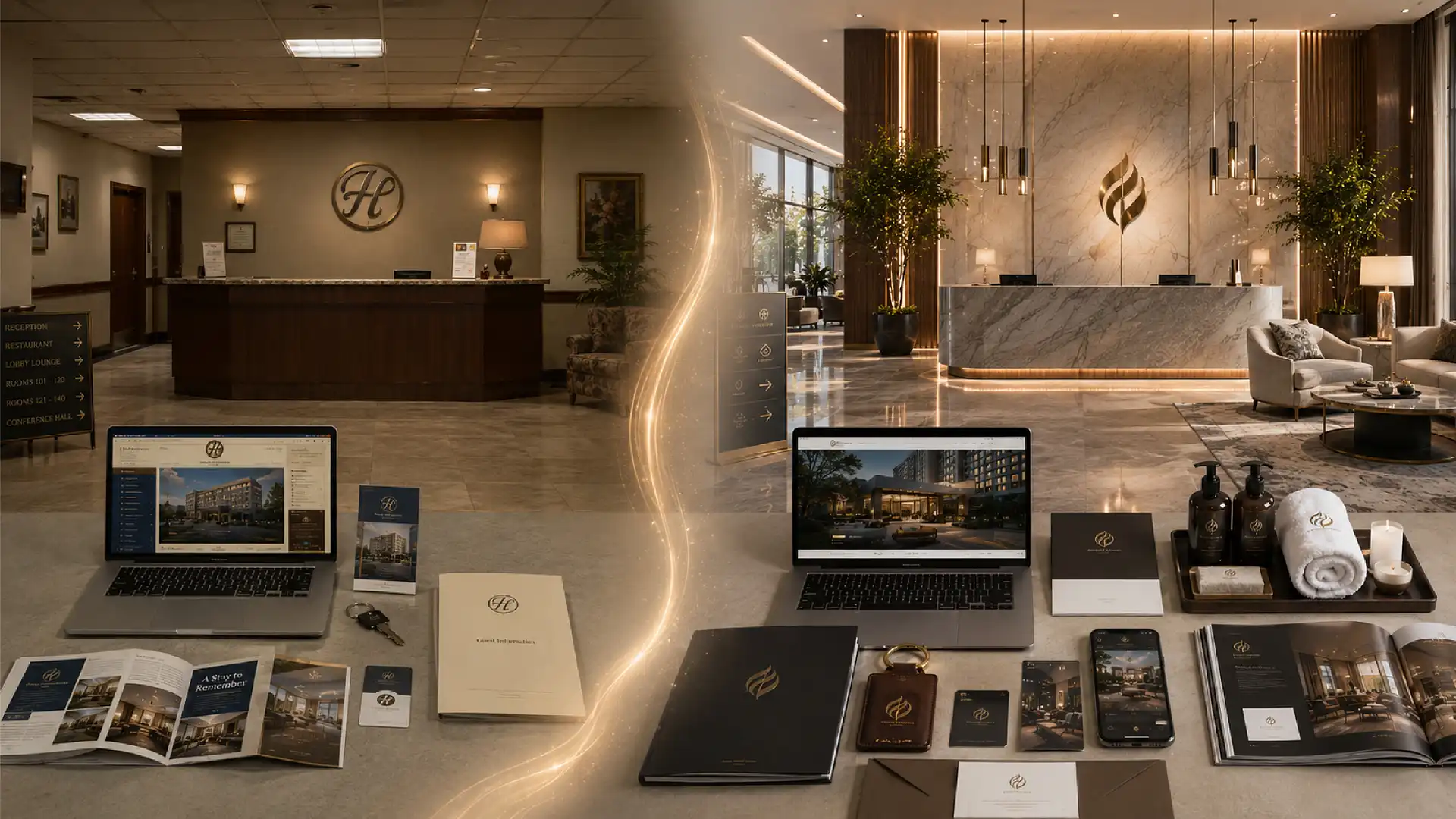
Even successful hotels occasionally require hotel rebranding. Changing guest expectations, new competition, ownership transitions, renovations, or business repositioning often create opportunities to refresh the brand and sharpen its value proposition.
Rebranding may involve updating the visual identity, redefining the brand positioning, redesigning guest touchpoints, refreshing interiors, or modernising communication to better serve guests.
Successful rebranding preserves the property’s strengths while introducing a renewed identity that better reflects current market expectations and guest needs.
Rather than simply redesigning a logo, effective rebranding reshapes how guests perceive and experience the hotel.
Choosing the Right Hotel Branding Agency

Creating a memorable hospitality brand requires expertise that goes beyond graphic design. A specialised hotel branding agency understands guest psychology, hospitality trends, customer journeys, operational realities, and market positioning, all of which shape a stronger value proposition.
The right hospitality branding agency develops comprehensive solutions that integrate strategy, visual identity, environmental branding, guest communication, digital presence, and marketing to support the guest experience.
Many businesses also seek complete hotel branding services, including naming, logo design, brand identity development, signage systems, website design, photography direction, marketing collateral, social media branding, and launch campaigns.
Partnering with an experienced hotel branding company ensures that every aspect of the guest experience aligns with the brand’s vision and business objectives.
Conclusion
Exceptional hotels are remembered not simply for luxurious rooms or premium amenities, but for creating meaningful experiences that guests carry with them long after checkout. Strong hotel branding transforms ordinary hospitality into a clearer, more compelling value proposition for guests, helping businesses build trust, increase guest loyalty, and stand out in an increasingly competitive industry.
Whether you’re launching a new property, repositioning an existing hotel, or planning a complete rebranding, investing in strategic branding creates lasting value for both your business and your guests.
At OH! Design Studio specialises in creating distinctive hospitality brands that combine strategy, creativity, and storytelling. As an experienced hotel branding agency, we help hotels, resorts, and hospitality businesses build compelling brand identities that inspire confidence, elevate guest experiences, and deliver a clearer value proposition.
Frequently Asked Questions (FAQs)
1. What is hotel branding?
Hotel branding is the process of creating a unique identity for a hotel through strategy, visual design, messaging, guest experience, and consistent communication that differentiates it from competitors.
2. Why is hotel branding important?
Strong hotel branding builds trust, improves brand recognition, increases guest loyalty, supports higher room rates, and encourages repeat bookings.
3. What is included in hotel branding design?
Hotel branding design includes logo design, colour palettes, typography, signage, stationery, menus, uniforms, website visuals, environmental graphics, and all guest-facing communication materials.
4. What is the difference between luxury hotel branding and boutique hotel branding?
Luxury hotel branding focuses on exclusivity, elegance, and premium experiences, while boutique hotel branding emphasises individuality, storytelling, local culture, and personalised guest experiences.
5. Why is hotel brand identity important?
A strong hotel brand identity creates consistency across every guest interaction, helping build trust, recognition, and emotional connections.
6. What does a hotel branding agency do?
A hotel branding agency develops branding strategies, visual identities, marketing assets, guest experience systems, digital branding, and communication materials specifically for hospitality businesses.
7. When should a hotel consider hotel rebranding?
Hotels should consider hotel rebranding after renovations, ownership changes, repositioning, declining market relevance, increased competition, or shifts in target audiences.
8. What are hotel branding services?
Hotel branding services typically include brand strategy, naming, logo design, visual identity development, website design, signage, marketing collateral, photography direction, and digital branding.
9. How does hotel marketing and branding work together?
Branding defines the hotel’s identity, while hotel marketing and branding work together to communicate that identity through advertising, digital marketing, social media, and guest engagement.
10. Why should hotels hire a professional hotel branding company?
A professional hotel branding company brings expertise in strategy, design, hospitality trends, and guest behaviour, ensuring every brand touchpoint contributes to a memorable and commercially successful guest experience.
For more information, please visit ohdesignstudio.com and follow OH! Design Studio on LinkedIn, Facebook, Twitter, and Instagram.